
Introduction: Why the Floor Keeps Changing
In modern warehouses, the plan changes before the shift even starts. Robotics software sits in the middle of that motion, trying to keep flow steady when demand swerves. Many teams bet on warehouse automation and software to tame peaks, yet more SKUs, shorter cycles, and tighter labor windows raise the stakes. A recent audit in a 3PL shows 27% task delay from handoffs alone—routing, queueing, and restarts. So the question is simple: if the system is fast, why does the floor still stall? Look, it’s simpler than you think. Old stacks rely on static rules, and the rules do not sense the floor. Without live signals from edge computing nodes, an AMR fleet cannot adapt to a jam in aisle 14, or a mis-scan at inbound. (Small delays snowball into lost hours.)
Where do legacy systems fail?
Traditional playbooks expect predictable lines and fixed paths. But pallets drift, priorities flip, and batteries fade. WMS rules need PLC handshakes to sync, and every handshake adds delay. When ROS 2 middleware is bolted on top of a legacy scheduler, the latency budget blows up—funny how that works, right? LiDAR SLAM maps update the world, yet the task planner often does not listen in time. The flaw is not in robots; it is in coordination. Cue micro-stops, manual overrides, and overtime. The deeper layer is this: brittle orchestration hides behind green dashboards. It shows service up, but not flow health. We move next to how an adaptive stack fixes the gap—and at what cost.
From Static Rules to Adaptive Control
What’s Next
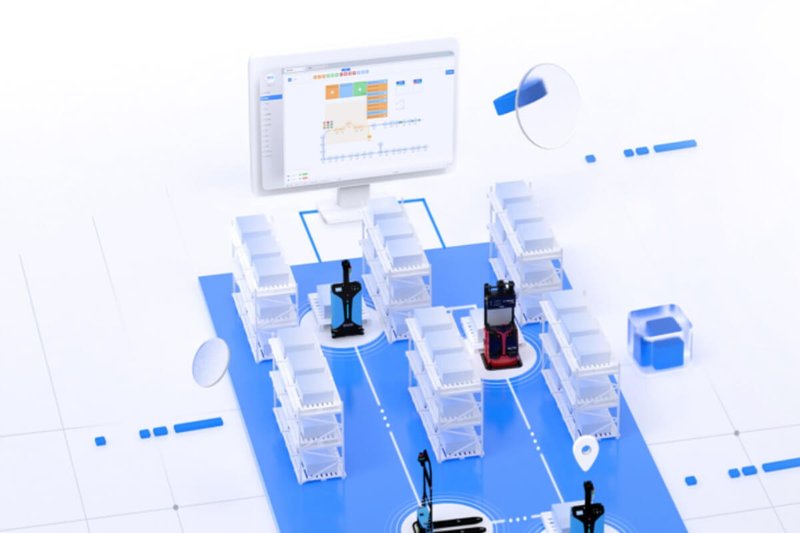
The next phase favors systems that learn the floor, not just map it. In practice, that means event-driven orchestration, local policies near the edge, and a planner that rewrites itself per shift. Instead of global queues, tasks flow through behavior trees that re-score routes if signals change. Think of it as control loops rather than scripts. A digital twin runs what-if checks against live data, while edge inference trims detours before they exist. This is where warehouse automation and software becomes a living layer—less monolith, more mesh. Compared to the old rule books, the new stack treats congestion as a signal, not a failure. It lowers mean dwell time, smooths charge cycles for power converters, and keeps human pickers in the loop with clear, short prompts.
To choose well, use three hard metrics, not vibes— and yes, test it on a rainy Monday. 1) Reconfiguration time: how many minutes to add a zone, SKU, or AMR without downtime. 2) Flow resilience: order-cycle volatility the system can absorb before on-time rate slips (measure at 90th percentile). 3) End-to-end latency under load: command-to-motion plus sensor-to-decision, not just API speed. In brief, we move from brittle rules to adaptive control, from status lights to flow signals, from fixed maps to learning loops. Evaluate, pilot, and then scale with discipline. For a neutral benchmark and further reading, see SEER Robotics.